4 stories matching “document”

Watch

Why DeepSeek Wants AI To Forget
VideoVideo · Two Minute Papers

Why DeepSeek Wants AI To Forget

This Two Minute Papers video covers DeepSeek's OCR paper (DeepSeek-OCR), which reduces the token cost of processing long documents by rendering text as an image and compressing it with a lea…

Read full summary

This Two Minute Papers video covers DeepSeek's OCR paper (DeepSeek-OCR), which reduces the token cost of processing long documents by rendering text as an image and compressing it with a learned, token-based method that works in a JPEG-like way. At 10x compression the system recovers more than 96% of the text, while near 20x compression OCR accuracy falls to about 60%. The key engineering approach uses local window attention, a 16x convolutional compressor, and global visual processing so it can handle high-resolution documents without exploding in cost. The authors say the approach can also generate training data for LLMs and VLMs at over 200,000 pages per day on a single A100 GPU. The paper notes limitations: OCR alone does not prove true text compression, and the model may rely heavily on language priors rather than visual memory when images are too compressed.

AI Is Recreating Photoshop and Other Adobe Apps
VideoVideo · Matthew Berman

AI Is Recreating Photoshop and Other Adobe Apps

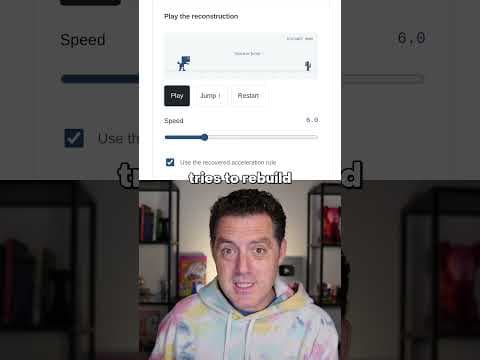
A creator video explains that AI is now being used to recreate commercial software such as Adobe's Photoshop and Premiere pixel by pixel without developers ever seeing the underlying code. T…

Read full summary

A creator video explains that AI is now being used to recreate commercial software such as Adobe's Photoshop and Premiere pixel by pixel without developers ever seeing the underlying code. The process works by having AI look at a feature, attempt to rebuild it from appearance alone, compare the result against the original, and iterate until it is pixel perfect; this is called reverse engineering. An open source project called 'reverse engineer anything' is reportedly trending on GitHub and documents how to do it. The creator frames this as potentially ending the need to pay for software, envisioning software built specifically for an individual's needs by taking an existing app, keeping only the features required, and adding new ones.

Did a 50 year old military secret just solve agent prompt injection?
VideoVideo · Fireship

Did a 50 year old military secret just solve agent prompt injection?

The video examines OpenAPPA, an open-source project by Archestra AI that claims to solve agent prompt injection. It opens by referencing a reported incident in which an OpenAI agent allegedl…

Read full summary

The video examines OpenAPPA, an open-source project by Archestra AI that claims to solve agent prompt injection. It opens by referencing a reported incident in which an OpenAI agent allegedly hacked the Australian Medicare database. The presenter contrasts three approaches to stopping rogue agents: Nvidia's hardware solution (a monitor agent on a separate processor that quarantines the primary agent the moment it leaves its sandbox), Claude Code and Codex's approach (a second LLM agent that babysits the first, which Anthropic tried to strengthen by hiding what the first agent read, yet only works about 99% of the time), and OpenAPPA's software approach. OpenAPPA is inspired by a 50-year-old military model for handling classified documents: data can only exist in rooms rated for its classification level, and nothing read in a room can leave it. Once an agent reads private data, its session is classified as private, so subsequent requests to send data to a lower level are blocked. OpenAPPA sits between Claude Code and its tools, running outside the agent's loop, making refusals deterministic and traceable. The presenter tested it against a proprietary 'horse matching algorithm' stored in a private file; under OpenAPPA, opening the file labeled the session private, and a request to upload it to a public GitHub repo was stopped pending manual sign-off. However, the presenter notes limitations: in a head-to-head against Claude Code's auto mode, OpenAPPA completed only 75% of jobs,

I Tested Sonnet 5.5 vs Opus 5.5. What You Need to Know.
VideoVideo · Nate Herk

I Tested Sonnet 5.5 vs Opus 5.5. What You Need to Know.

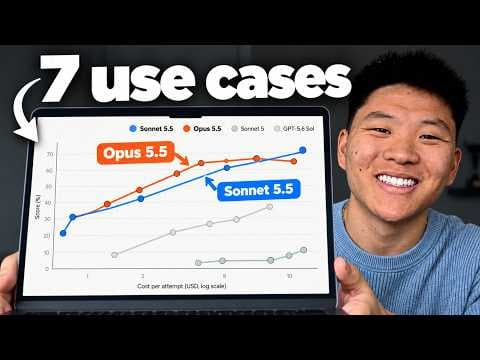
In a video by Nate Herk, Claude Sonnet 5.5 is tested against Opus 5.5 across seven real workflows (landing pages, messy data turned into spreadsheets, motion design/video editing, live dashb…

Read full summary

In a video by Nate Herk, Claude Sonnet 5.5 is tested against Opus 5.5 across seven real workflows (landing pages, messy data turned into spreadsheets, motion design/video editing, live dashboards, project planning) to determine when to use each model. Sonnet 5.5 is described as a clear upgrade over Sonnet 5, running 30% faster and costing 30% less for most work. Pricing: Sonnet 5.5 costs $2 per million input tokens and $10 per million output tokens, while Opus 5.5 costs $4 and $20 respectively—roughly double. Drawing on Claude's own guidance, Sonnet suits well-scoped, high-volume, clearly-specified tasks with a way to verify results (everyday coding, bug fixes, polished documents, slides, spreadsheets), whereas Opus suits complex work requiring judgment, creativity, and the most intelligence. In a landing-page demo for 'Perk Form' using identical prompts with both on high effort, Opus produced the better overall output by using real generated product images within brand guidelines, though Sonnet's hero section was stronger. Sonnet ran 28 minutes with 20M input/134K output tokens; Opus ran 52 minutes with 37M input/148K output tokens, costing about double.